
category
- ALL
- Bilingual Doctor
- Breast augmentation
- Deep Plane ミニリフト
- Extended Deep Plane Facelift
- HIFU
- Medical Hair Removal
- Rhinoplasty
- Uncategorized
- お知らせ
- カウンセリング
- くま治療
- しみ
- スキンボトックス
- たるみ
- ヒアルロン酸
- フェイスリフト
- ボトックス
- ボルニューマ
- メンズ美容医療
- わきボトックス
- わき汗
- 乳輪の色素改善
- 他院修正
- 医療アートメイク
- 医療脱毛
- 学会活動
- 新メニュー
- 毛穴
- 無断キャンセル
- 症例画像
- 眼瞼下垂
- 立体脂肪注入
- 美容
- 美容外科学会(JSAPS)
- 肌メンテ
- 肌育
- 肌質改善
- 肝斑
- 脂肪注入
- 自分らしさを消さない
- 裏ハムラ
- 論文
- 豊胸
- 針脱毛
- 骨切り
患者様との「共通言語」
監修医師

MSA美容外科 院長モレロ オースティン誠
1989年、アメリカ生まれ。10歳より沖縄で育つ。日本とアメリカ、双方の文化や価値観に触れてきた経験を生かし、患者様一人ひとりが持つ異なる美意識や希望を尊重した診療を大切にしています。日本語・英語の両方で診療を行い、国内外の知見を取り入れながら、自然で長期的な美しさを目指した美容医療を提供しています。大手美容外科にて約8年間、美容外科・美容皮膚科診療に携わり、2024年にMSA美容外科を開院。
略歴
2018〜2024年 大手美容外科沖縄院 院長
2024年 MSA美容外科 開院
資格・所属学会
日本美容外科学会(JSAS)認定専門医
日本美容外科学会(JSAS)正会員
日本美容外科学会(JSAPS)関連会員
The Rhinoplasty Society 海外会員
American Academy of Cosmetic Surgery(AACS)正会員
日本美容皮膚科学会 正会員
日本美容外科医師会 正会員
患者様との「共通言語」
本日は、外国人の患者様のカウンセリングが 4件もありました。
ご相談内容は、豊胸、肌質改善、腹壁形成、ジュベルックなど。特定の施術に偏ることなく、美容外科から美容皮膚科まで実に多岐にわたる一日でした。
先日も、くまの手術や、外鼻形成、顔のたるみについて外国人の患者様からご相談があり、明日はフェイスリフトのカウンセリングを予定しています(実は、日曜日も表向きには休診としていますが、午前中だけ、ひっそりとカウンセリングをやっております)。
そして9月2日には、外国人の患者様のフェイスリフト手術も予定。
当院を知ったきっかけを伺うと、以前に治療を受けられた患者様からのご紹介であったり、Googleで英語対応のできるクリニックを検索して見つけてくださったりと、さまざまです。
開院当初と比べると、「英語で医師と直接相談できるクリニック」ということが、少しずつ浸透してきたのかもしれません。自分の特技を、そのまま診療に活かすことができている。これは素直に嬉しいことです。
外国人の患者様からは、ときどき次のようなお話を伺います。
「ほかのクリニックにも行ったけれど、医師とはほとんど話ができなかった」
「通訳を介したけれど、自分の希望が医師に正しく伝わったのか分からなかった」
「医師と十分に意思疎通ができないまま、施術の説明が進んでしまった」
これは、言語の問題ではありますが、ある意味では、日本の美容医療でよく見られる「カウンセラー制度」と同じ構造なのかもしれません。患者様が希望や不安を話す相手と、実際に診断し、施術を行う医師が別であれば、その間にはどうしても情報の抜けや解釈のずれが生じます。日本語が通じていたとしても、医師と患者様が直接、十分に話していなければ、本当の意味で意思疎通ができているとは限りません。
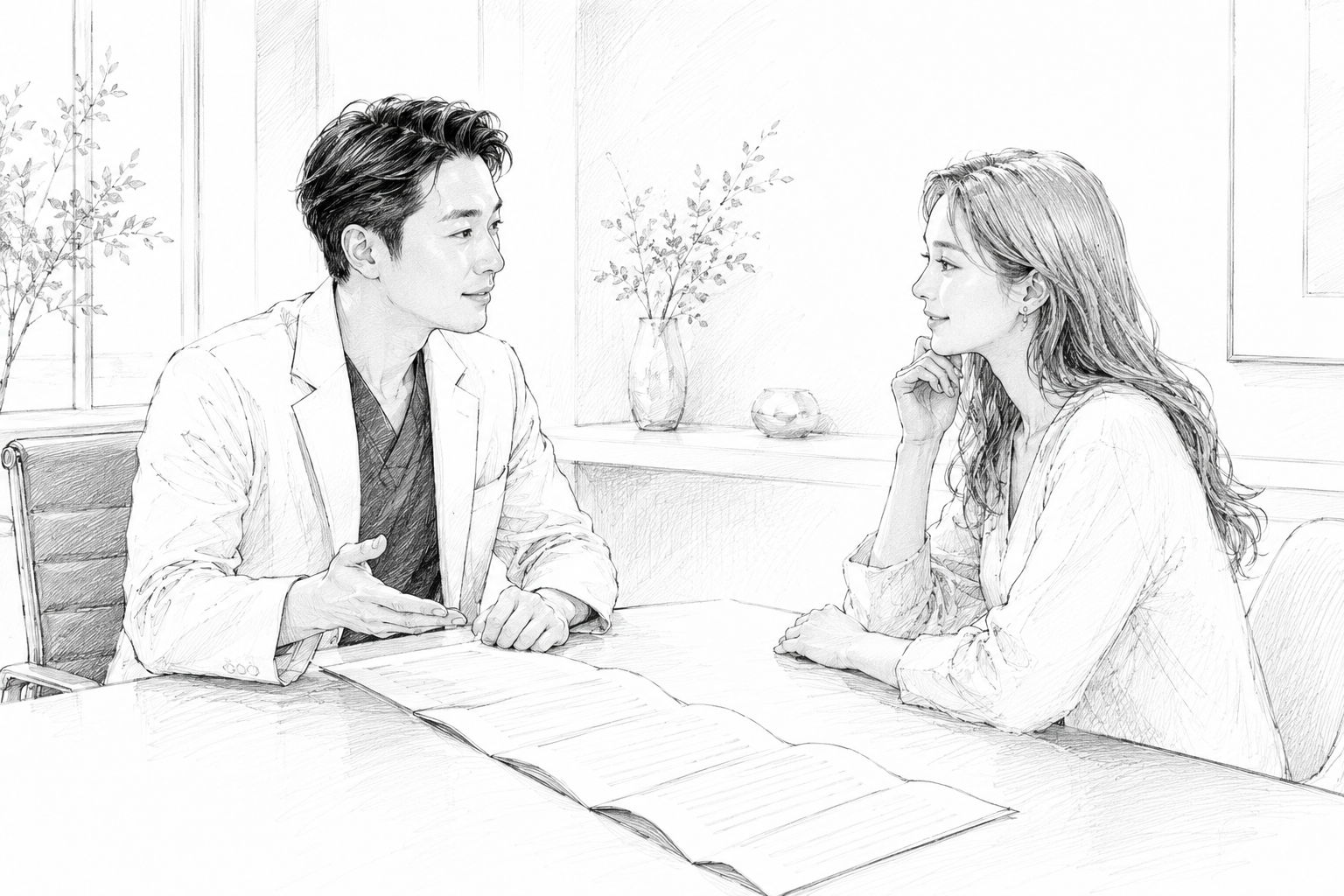
当院では、日本人でも外国人でも、原則として医師が直接カウンセリングを行います。
何を気にしているのか。どのような変化を望んでいるのか。どこまでの変化なら、その方らしさを損なわずに実現できるのか。期待できる効果だけでなく、限界やリスクについても、医師自身がきちんと説明する。言語が日本語であっても英語であっても、この部分は変わりません。
ちなみに、当院の紙の問診票は、めちゃくちゃ長いです 笑
記入項目が多いため、ときどき患者様から文句を言われることもあります。
しかし、あの問診票は単に既往歴や希望する施術を確認するためだけのものではありません。これから医師とのカウンセリングでどのようなことを聞かれるのか。自分は何を気にしていて、何を変えたいのか。これまでにどのような治療を受け、その結果をどう感じているのか。
それらを患者様自身にも一度整理していただくための、いわばカウンセリング前の「準備体操」です。そして少し大げさに言えば、医師と一緒に自分の顔や身体について考える時間へ入っていくための、一つの「儀式」でもあります。
美容医療の相談では、「とりあえず若くなりたい」「なんとなくここが気になる」という曖昧な感覚から始まることも少なくありません。そして、その曖昧な感覚を曖昧なまま施術へつなげてしまうのは危険です。
問診票に向き合い、いくつかの問いに答える過程で、自分の希望や不安を少しずつ言葉にしていく。その作業が、その後のカウンセリングをより深く、より正確なものにします。
もちろん、問診票だけですべて理解できるわけではありませんが… 書かれた答えを出発点として、そこから医師が直接話を聞き、言葉の奥にある意図を確かめていくことが大切です。
特にアメリカ人の患者様とは、話が合うことが多いものです。
今日はマサチューセッツ出身の方がいらっしゃいました。私はニューハンプシャーやコネチカットに家族がいるため、私にとっても馴染みのある地域でした。地元の話をしたり、冗談を言い合ったりしながらカウンセリングをしていると、どこか懐かしい気持ちになります。
沖縄で診療をしながら、自分の出身国の方々にも少しずつ還元できている。そんな、少し不思議でありながら、嬉しい感覚もあります。
医学を学んでいると、「共通言語」という表現がよく使われます。医師同士が同じ解剖学的名称や医学用語を使うことで、認識を共有し、正確に議論するためのものです。しかし、医師同士で共通言語を使えても、患者様との間に共通言語をつくれなければ、診療としては十分ではありません。
これは、日本語か英語かという問題だけではないと思います。
同じ「自然にしたい」という言葉でも、ある方にとっては「誰にも気づかれない程度」という意味かもしれませんし、別の方にとっては「変化は欲しいけれど、いかにも手術をした顔にはしたくない」という意味かもしれません。
「若く見せたい」
「しっかり変えたい」
「やりすぎたくない」
「自分らしさを残したい」
一つひとつの言葉の定義や、その言葉に込められた感覚は、人によって少しずつ異なります。
だからこそ、美容外科医は、患者様の言葉をそのまま表面的に受け取るだけではいけません。
その方が何を見て、何を感じ、どのような思いでその言葉を使っているのか。会話を重ねながら、その意図を丁寧に紐解いていく必要があります。
長い問診票も、医師による直接のカウンセリングも、そのため。
日本語でも英語でも、そして言葉だけでは表現しきれない感覚の部分でも、患者様と医師の間に「共通言語」をつくっていく。それもまた、美容外科医の大切な使命の一つだと思います。
さまざまな国の、さまざまな背景を持つ方と出会い、それぞれの悩みや思いに触れることができる。
やはり、この仕事は面白いものです。
Finding a “Common Language” With Our Patients
Today, I had four consultations with international patients.
Their concerns covered a wide range: breast augmentation, skin quality improvement, abdominoplasty, Juvelook, and more. It was a day that spanned the full spectrum of aesthetic medicine, from cosmetic surgery to nonsurgical skin treatments.
Recently, I have also seen international patients seeking consultations for under-eye bag surgery, rhinoplasty, and facial sagging. Tomorrow, I have another facelift consultation scheduled.
In fact, although the clinic is officially closed on Sundays, I quietly hold consultations on Sunday mornings from time to time. I generally keep this a secret. I do not want my Sundays to become too busy.
We also have a facelift surgery scheduled for an international patient on September 2.
When I ask patients how they found our clinic, the answers vary. Some were referred by patients who had previously received treatment here, while others found us through a Google search for a clinic where they could communicate directly with the doctor in English.
Compared with when we first opened, perhaps word is gradually spreading that we are a clinic where patients can consult directly with the doctor in English.
I am genuinely happy to be able to use one of my particular strengths so directly in my clinical practice.
International patients sometimes tell me things such as:
“I visited another clinic, but I barely had a chance to speak with the doctor.”
“I used an interpreter, but I was not sure whether my wishes were communicated accurately to the doctor.”
“The discussion about treatment moved forward before I felt that I had properly communicated with the doctor.”
On the surface, this may appear to be a language problem. In a way, however, it may reflect the same structure as the communication system commonly used in Japanese aesthetic clinics.
When the person listening to a patient’s wishes and concerns is different from the doctor who will actually evaluate and treat them, some information will inevitably be lost, altered, or interpreted differently along the way.
Even when everyone speaks Japanese, true communication cannot be assumed if the patient and the doctor have not had the opportunity to speak directly and thoroughly.
At our clinic, consultations are conducted directly by the doctor as a general rule, whether the patient is Japanese or international.
Our paper medical questionnaire is extremely long—almost ridiculously so.
Because there are so many questions, patients occasionally complain about it. Or just scribble away with random answers…
However, the questionnaire is not simply there to document medical history or identify which procedure a patient is interested in.
It gives patients an idea of what they will be asked during their consultation with the doctor, and what to expect from me.
What exactly concerns me?
What would I like to change?
What treatments have I previously received?
How did I feel about their results?
The questionnaire gives patients an opportunity to organize these thoughts for themselves. In that sense, it serves as a kind of “warm-up exercise” before the consultation.
And, if I may put it somewhat dramatically, it is also a small ritual marking the transition into a time when the patient and doctor will think seriously together about the patient’s face or body.
Aesthetic consultations often begin with a vague feeling:
“I just want to look younger.”
“Something around here bothers me, but I cannot quite explain it.”
There is nothing wrong with beginning from an unclear feeling. What is dangerous is allowing that feeling to remain vague and proceeding directly to treatment without defining it more carefully.
As patients work through the questionnaire and answer each question, they gradually begin to put their hopes, concerns, and uncertainties into words.
That process allows the consultation that follows to become deeper and more precise.
Of course, a questionnaire alone can never tell us everything about a patient.
The written answers are merely a starting point. From there, the doctor must listen directly, ask further questions, and try to understand the intentions and emotions behind the words.
Doctors use standardized anatomical terms and medical terminology so that they can share the same understanding and discuss a patient accurately. In medicine, we often call this “a common language.”
But even if doctors share a common language with one another, medical care remains incomplete unless we can also establish a common language with our patients.
And I do not think this is simply a question of Japanese versus English.
When two patients say, “I want a natural result,” they may mean entirely different things.
For one person, it may mean, “I do not want anyone to notice that I had anything done.”
For another, it may mean, “I want a visible improvement, but I do not want to look obviously operated on.”
“I want to look younger.”
“I want a noticeable change.”
“I do not want to overdo it.”
“I still want to look like myself.”
The definition of each phrase—and the feeling contained within it—differs slightly from one person to another.
That is why an aesthetic surgeon cannot simply take a patient’s words at face value.
We must try to understand what the patient is seeing, what they are feeling, and what they truly mean when they choose a particular word. Through careful conversation, we need to gradually unravel the intention behind it.
That is the purpose of both our very long questionnaire and our direct consultations with the doctor.
Whether we are speaking Japanese or English—and even when we are trying to understand feelings that cannot be fully expressed through language—we must work to create a “common language” between patient and doctor.
reservation診察予約
お気軽にお問い合わせください。
受付時間:9:00~18:00
夜間診療あり(指定した金曜日の20:00~22:00)
 LINE予約
accessアクセス
MSA美容外科
〒900-0006
沖縄県那覇市おもろまち4-9-10ブギービル5階
- 電話番号:
- 098-867-3311
- 診療科目:
- 美容皮膚科・美容外科・皮膚科・形成外科
- アクセス:
- 那覇メインプレイスから徒歩5分
- 休診日:
- 不定休
- 駐車場:
- 駐車場について
 WEB予約
WEB予約
 電話予約
電話予約